Beyond Emergency Response: Why Surviving Isn't the Same as Healing
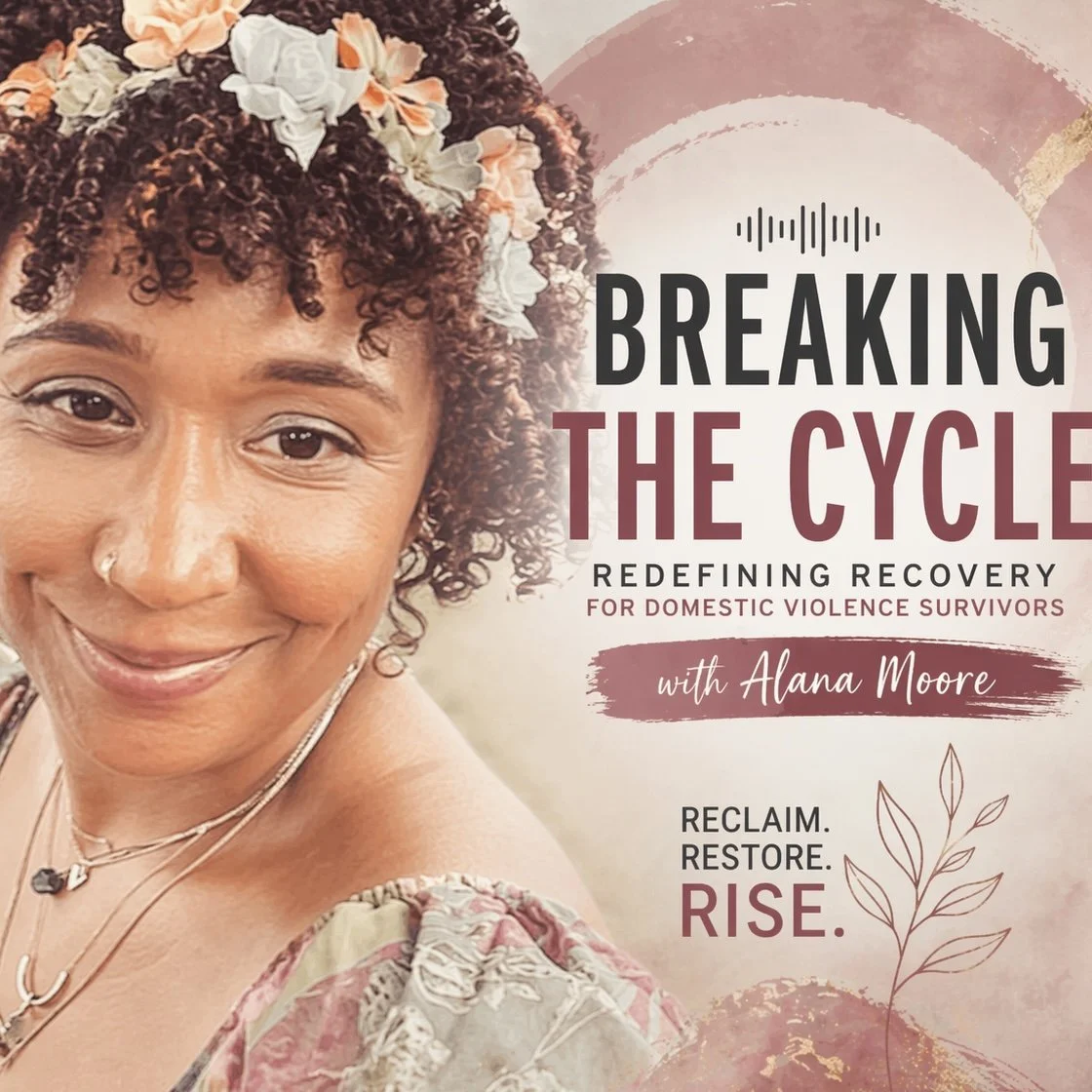
I know what it feels like to walk out of an abusive relationship with nothing. No money, no plan, and no idea who I was anymore. I also know what it feels like to reach for help and find a system that was designed to get me through the next thirty days, not the next thirty years. That gap, between surviving and actually healing, is what drove me to spend four years at UC Berkeley studying it, and it is what the Souza Foundation exists to close.
Intimate partner violence affects more than sixty-one million women in the United States, crossing every line of race, income, and geography (Centers for Disease Control and Prevention [CDC], 2024). The response system that has been built to address it is, in many ways, remarkable. Emergency shelters save lives every single day. Hotlines provide lifelines at 3 in the morning when there is nowhere else to turn. The advocates who staff those services do work that most people cannot imagine doing. None of what follows is a critique of them.
The critique is structural. As Baker and colleagues (2010) document, survivors leaving crisis services frequently face damaged credit, no employment history, unresolved trauma, and no viable path to stable housing. The system was designed to address the emergency. It was never designed to address what comes after.
Judith Herman's (2015) research on trauma recovery identifies three stages that genuine healing requires: establishing safety, remembrance and mourning, and reconnection with ordinary life. Emergency shelters do important work at the first stage. What they cannot provide, because of time and funding constraints, is the sustained support that the second and third stages demand. When a thirty-day stay ends, the trauma does not.
The survivors I interviewed for my thesis described this gap in concrete terms. One explained that all the shelters she called were full, and she had internalized the belief that her situation was not bad enough to justify taking up space (Survivor B, personal communication, January 2025). Another described cashing in the change from her car just to have enough gas to leave in the middle of the night (Survivor A, personal communication, January 2025). These are not edge cases. They are what the system looks like from the inside, and they point directly to what is missing.
Research on transitional housing programs that last twelve to twenty-four months shows dramatically better outcomes than crisis-only interventions across housing stability, employment, mental health, and children's wellbeing (Wood et al., 2023). That finding is not surprising once you understand what Herman (2015) describes. Healing takes time. It requires consistency, community, and the freedom to rebuild on your own terms. A program like Greenhouse17 in Kentucky, which pairs survivors with therapeutic farm work, financial education, and peer community, shows what that can look like in practice. As Diane Fleet, its director, explained, working with plants and nature provides healing benefits that a traditional shelter simply cannot replicate, including improved wellness, reduced anxiety, and a genuine sense of being part of something larger than one's own pain (D. Fleet, personal communication, January 2025).
What keeps women from accessing this kind of support, or from leaving at all, is rarely a lack of desire to be free. Coercive control, which Stark (2007) describes as the systematic targeting of a survivor's freedom and sense of self rather than discrete incidents of physical violence, leaves many women without the financial resources, the employment history, the credit, or the social connections needed to make independence feel possible. Abusers engineer that dependence deliberately. Crisis intervention, by itself, cannot undo it.
The Souza Foundation is being built around a different premise. Safe housing is the floor, not the ceiling. The women who come to us deserve therapy, economic empowerment, peer connection, and the time to actually heal, not just survive. That is what the research supports, and more importantly, it is what survivors themselves have been saying for decades to anyone willing to listen.
Recovery is not a thirty-day process. It is a long, nonlinear, often isolating journey toward reclaiming everything that abuse took. The least we can do is build systems that go the distance.
If you or someone you know needs support, the National Domestic Violence Hotline is available 24 hours a day at 1-800-799-7233.
References
Baker, C. K., Billhardt, K. A., Warren, J., Rollins, C., & Glass, N. E. (2010). Domestic violence, housing instability, and homelessness: A review of housing policies and program practices for meeting the needs of survivors. Aggression and Violent Behavior, 15(6), 430-439.
Centers for Disease Control and Prevention. (2024, May 16). About intimate partner violence. https://www.cdc.gov/intimate-partner-violence/about/index.html
Fleet, D. (2025, January). Personal interview on therapeutic horticulture and domestic violence recovery programs [Personal communication]. Greenhouse17.
Herman, J. L. (2015). Trauma and recovery: The aftermath of violence from domestic abuse to political terror. Basic Books.
Stark, E. (2007). Coercive control: How men entrap women in personal life. Oxford University Press.
Survivor A. (2025, January). Personal interview on domestic violence experiences and recovery needs [Personal communication].
Survivor B. (2025, January). Personal interview on domestic violence experiences and recovery needs [Personal communication].
Wood, L., McGiffert, M., Fusco, R. A., & Kulkarni, S. (2023). "The propellers of my life": The impact of domestic violence transitional housing on parents and children. Child and Adolescent Social Work Journal, 40(6), 883-897.